Why the Social Dancing Part of Salsa Feels Scarier Than the Steps
Quick Answer: Class teaches you steps in a structured, low-stakes setting with a patient instructor, while a social dance floor requires reading an unfamiliar partner’s lead in real time with no pause button — that jump from structured practice to live improvisation is a genuinely different skill from memorizing steps, which is why competent students often still feel anxious at their first social.
You nailed the basic step, the cross-body lead, even a turn pattern. None of that fully prepares you for someone new asking you to dance.

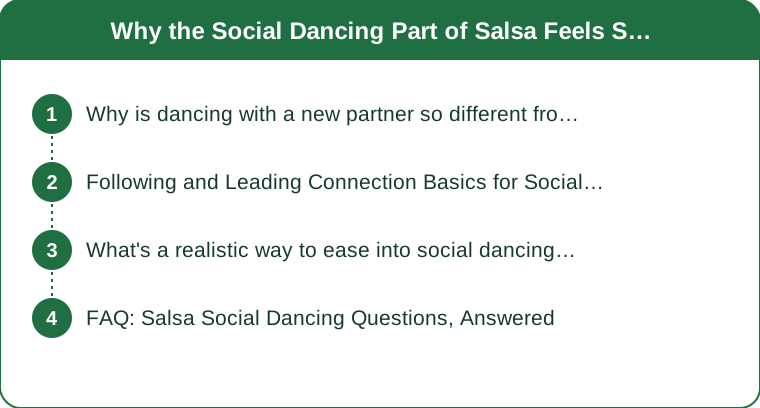
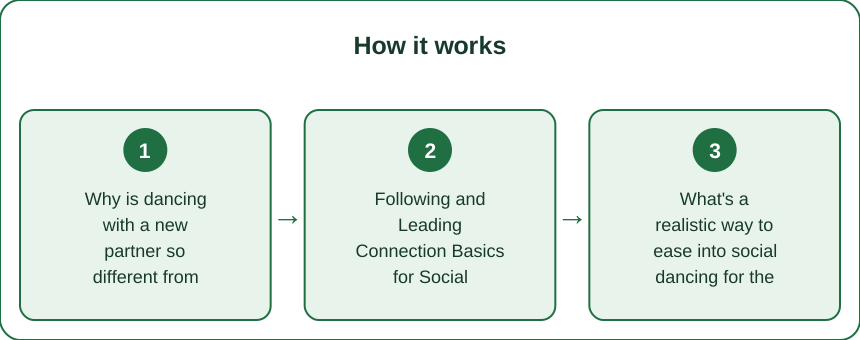
Why is dancing with a new partner so different from practicing with a familiar one?
In class, you often practice the same combination repeatedly with a partner who knows what’s coming, which builds muscle memory for specific patterns rather than the more general skill of following or leading an unfamiliar person’s individual style and timing. A social partner may lead slightly differently, at a different tempo, or with variations you haven’t drilled — reading and adapting to that in real time is its own separate skill.
Following and Leading Connection Basics for Social Dancing
As a follower, connection comes primarily through your partner’s frame (arm tension and hand pressure), not verbal cues — learning to read subtle pressure changes rather than anticipating specific steps helps you follow leads you’ve never practiced. As a leader, clear, consistent frame and timing matter more than fancy patterns — a simple, well-led basic step is a better social dance than an ambitious pattern led unclearly.

What’s a realistic way to ease into social dancing for the first time?
Go to a social specifically known as beginner-friendly (many studios host these), and plan to dance mostly with people you recognize from class at first. It’s completely normal, and common, to spend a chunk of your first social watching before dancing much — there’s no required minimum, and most experienced dancers remember their own first social vividly enough to be patient with beginners.
FAQ: Salsa Social Dancing Questions, Answered
Is it rude to say no if someone asks you to dance?
No — declining a dance is normal and accepted etiquette in salsa social culture, whether you’re tired, unfamiliar with the style being played, or just not feeling it in the moment.
How do you actually ask someone to dance without overthinking it?
A simple verbal invitation or an extended hand with eye contact is standard — elaborate approaches aren’t expected or necessary, and most experienced dancers appreciate directness over hesitation.
Is it okay to tell a partner you’re a beginner?
Yes, and it’s actually helpful — most partners will adjust their lead complexity and patience level once they know, which generally makes the dance more enjoyable for both people.
TL;DR:
- Social dancing requires reading unfamiliar partners in real time, a different skill from memorized class patterns
- Connection comes through frame and pressure, not verbal cues — learn to read and give that
- Beginner-friendly socials and dancing with familiar classmates first ease the transition
- Declining a dance or mentioning you’re new are both normal, accepted parts of social etiquette
The steps get you on the floor — the connection skill is what actually makes the dance work, and that only builds with real social practice.
Keep Reading
This article is for general informational and styling purposes only. Fit, sizing, and product availability may vary.