Why Beginners Almost Always Count Salsa on the Wrong Beat at First
Quick Answer: Salsa music has a strong, syncopated percussion layer that often accents beats a new dancer’s ear naturally locks onto — but the actual dance count (1-2-3, pause, 5-6-7, pause, within an 8-count measure) doesn’t always line up with the most audible instrument, which is why beginners frequently start dancing confidently on a beat that isn’t actually ‘the one,’ the anchor beat instructors count from.
This mismatch between what’s loudest and what’s structurally ‘the one’ is the single most common source of early salsa timing confusion.
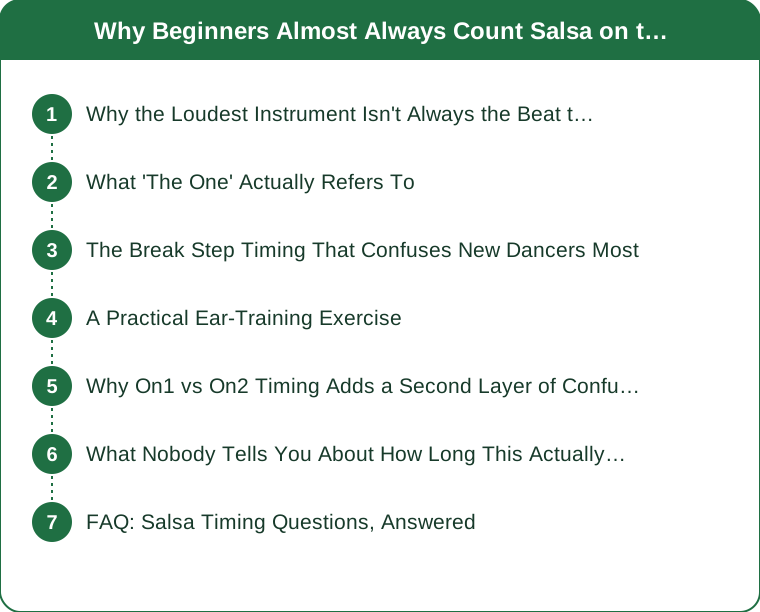
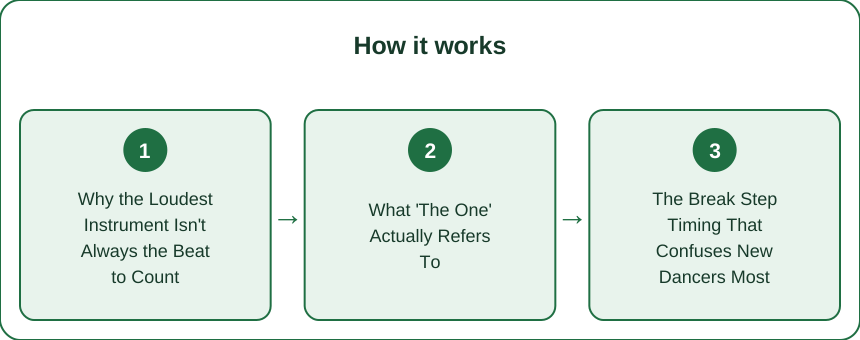
Why the Loudest Instrument Isn’t Always the Beat to Count
Salsa arrangements layer multiple percussion instruments (congas, timbales, claves) each playing distinct, interlocking rhythmic patterns, and a beginner’s ear naturally gravitates toward whichever instrument is loudest or most rhythmically insistent in the mix — which is frequently not the underlying beat structure the dance count is built on. This is different from most Western pop music, where the beat to dance to is usually also the most obvious one to hear.
What ‘The One’ Actually Refers To
In salsa counting, ‘the one’ is the first beat of the 8-count musical phrase, and it’s typically identified by listening for the piano or bass pattern (the montuno or tumbao) rather than the congas or timbales, since those instruments often play syncopated patterns that deliberately land between or around the main beats rather than directly on them. Instructors frequently have students listen specifically to bass or piano first, separate from the full mix, to train the ear on this.
The Break Step Timing That Confuses New Dancers Most
Salsa’s basic step pattern moves on counts 1-2-3 and 5-6-7, with a pause (no weight change) on counts 4 and 8 — a beginner who’s counting incorrectly often ends up stepping through what should be a pause, or pausing where they should be stepping, which compounds the confusion since their steps and the music’s actual accents drift further apart with each measure rather than resetting.

A Practical Ear-Training Exercise
Playing a salsa track and clapping only on count 1 of every measure, using a metronome or slowed-down track initially to find it reliably, builds the specific skill of isolating ‘the one’ from the rest of the rhythmic texture. Many instructors recommend this as isolated listening practice, separate from actual stepping, since combining new footwork with new listening skills simultaneously is often too much at once for a true beginner.
Why On1 vs On2 Timing Adds a Second Layer of Confusion
Beyond finding ‘the one’ correctly, different salsa styles (LA-style On1, New York-style On2) break on different counts of the same 8-count phrase, which means a dancer trained in one style can feel completely lost dancing to instruction in the other, even with a correct ear for the underlying beat. Sticking with one style consistently while learning, rather than mixing instruction from both, avoids adding this second layer of confusion on top of basic beat-finding.
What Nobody Tells You About How Long This Actually Takes
Reliably hearing ‘the one’ in a new, unfamiliar salsa track — not just a practice track you’ve memorized — typically takes several weeks to a few months of regular listening and dancing practice, and even experienced social dancers occasionally take a measure or two to lock onto the beat in an unfamiliar song. This is a normal part of the learning curve, not a sign of poor rhythm.
FAQ: Salsa Timing Questions, Answered
Is it normal to feel lost on the beat even after several classes?
Yes — beat-finding is a separate skill from footwork, and it’s common for dancers to have solid steps well before their ear reliably locks onto the beat in new songs.
Does dancing to slower salsa songs make it easier to learn timing?
Generally yes — slower tracks give more processing time to identify the beat pattern, which is why many instructors start beginners on slower songs before moving to full-tempo music.
Should I learn On1 and On2 timing at the same time?
Most instructors recommend mastering one style’s timing solidly first, since learning both simultaneously as a beginner tends to blend and confuse the two counting systems.
TL;DR:
- The loudest instrument in a salsa mix isn’t always the beat the dance count is built on
- ‘The one’ is usually easier to hear in the bass or piano pattern than in congas or timbales
- Isolated clapping practice on count 1, separate from footwork, builds reliable beat-finding
- On1 and On2 styles break on different counts — learn one consistently before mixing in the other
Struggling to find the beat at first isn’t a rhythm problem — it’s usually just your ear needing time to learn which layer of a busy mix is actually the one to count from.
Keep Reading
This article is for general informational and styling purposes only. Fit, sizing, and product availability may vary.