Why You Can Hear the Beat Perfectly and Your Feet Still Arrive Late
Quick Answer: Hearing a beat and producing a movement on it are different tasks with different timing requirements. Movement has to be initiated before the beat - there is a delay of roughly 100 to 200 milliseconds between deciding to move and the foot actually landing - so dancers who step when they hear the beat are always late by exactly that delay. You have to anticipate, not react. Stop stepping on the beat and start starting on it.
Your ears are fine.
You are simply reacting to something you should be predicting.
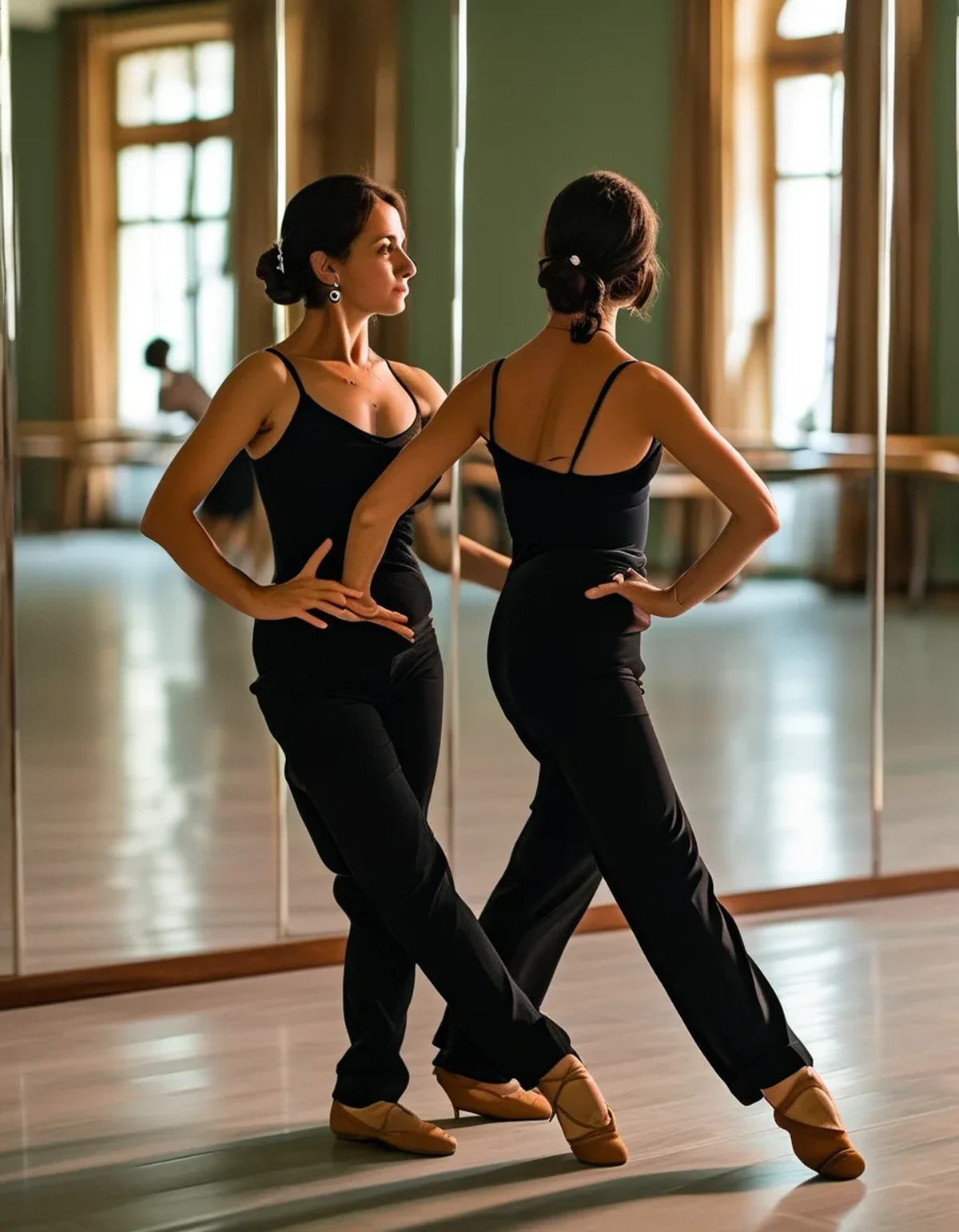
Why does reacting always arrive late?
Because there is an unavoidable delay between perception and movement.
Simple reaction time to a sound is roughly 140 to 200 milliseconds for most people. That is the gap between the sound reaching you and a muscle beginning to move - and it exists no matter how well you hear the beat.
Then the movement itself takes time. A weight transfer in salsa takes a few hundred milliseconds from initiation to completion, so the total from hearing to landing can approach half a beat at typical salsa tempos.
Salsa runs around 180 to 200 beats per minute in many recordings, which puts a single beat at roughly 300 to 330 milliseconds. Your reaction delay alone is a substantial fraction of a beat.
Which means reacting cannot work, ever. There is no amount of listening carefully that closes a physiological gap. Dancers who look perfectly on time are not reacting faster - they are predicting.
The brain is very good at this prediction when allowed to do it. Anticipatory timing based on a regular pulse is a well-studied ability and is far more accurate than reaction. Tapping along to a steady beat, people typically land slightly ahead of it, not behind - because they are predicting.
The whole skill is switching modes: from listening for the beat to feeling where it is going to be.
How do I actually switch to predicting?
Four steps, in order, and the first one is not dancing.
Start with the pulse before the steps. Stand still and let your body move gently with the music for a full minute - a small knee bend, a shift, a nod. No footwork. This is training the internal pulse, which is the thing you will be predicting from.
Then add clapping or counting slightly ahead. Aim to clap so the sound of your hands lands exactly on the beat, which means starting the clap before it. Feeling that lead-in is the whole lesson.
Then footwork alone at half speed. A slower track lets you feel the anticipation without the panic - anything around 150 to 160 beats per minute gives you room. Speed comes back easily once the timing habit is set.
Then add the partner last. A partner adds a second source of information and doubles the processing load, which is why timing that works alone falls apart in a hold.
And use a metronome for five minutes a day, off the dance floor. Stepping in place to a metronome at 90 bpm, aiming to land exactly with the click, builds the anticipation skill faster than an hour of social dancing. It is boring and it works.
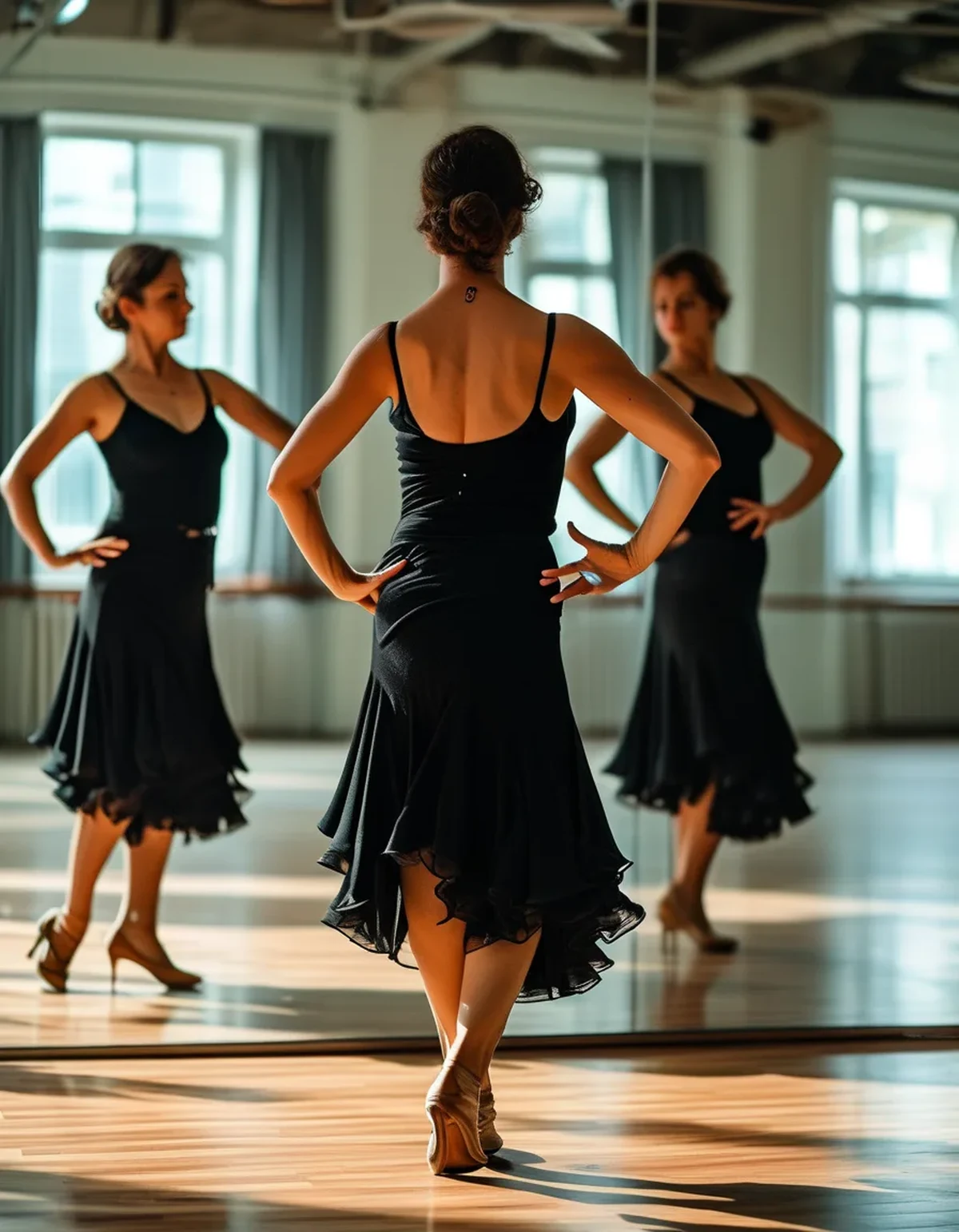
What else is making you late?
Five things, and most of them have nothing to do with hearing.
Weight is in the wrong place. If your weight is still settling on the previous foot, the next step cannot start on time regardless of your timing. Salsa is weight transfer, not foot placement - and late weight is the most common cause of late steps.
You are watching your feet. Looking down adds a visual checking loop that slows the whole process, and it moves your centre of mass forward, delaying the transfer. Eyes up is a timing correction, not just an aesthetic one.
Your steps are too big. A long step takes longer to complete and cannot be finished inside a fast beat. Smaller steps land earlier and look cleaner at speed.
Tension in the legs and hips. A tense muscle is slower to initiate movement than a relaxed one, and gripping the floor with your toes adds real delay.
You are listening to the melody rather than the rhythm section. Melody lines float around the beat by design; the conga, bass, and clave hold it. Many late dancers are perfectly on time with the wrong instrument.
And the biggest environmental one: you cannot hear the low frequencies. In a crowded room away from the speakers, the bass and percussion get absorbed by bodies and the melody dominates. Moving closer to a speaker sometimes fixes timing instantly.
What Nobody Tells You About Dance Timing
Everyone is slightly late when they learn a new pattern, permanently. Novel movement requires more processing and lands later, which is why your basic is on time and your new turn pattern is not. This resolves with repetition, not with more listening.
Timing gets worse under observation, not better. Being watched increases muscle tension and self-monitoring, both of which delay movement initiation. Timing that vanishes when someone watches is a tension problem.
Faster music is often easier to stay on than slow music. A fast pulse gives you less time to overthink and a stronger regular signal to predict from. Many dancers are more accurate at 190 bpm than 140.
Shoes change timing measurably. A shoe that grips the floor delays the weight transfer, and a sole that slides too much makes you hesitate. Suede-soled dance shoes exist for this reason and they solve real timing problems.
Leaders and followers experience the delay differently. A follower is responding to a lead as well as to the music, adding a second reaction chain - which is why a follower can be perfectly musical alone and half a beat late in a hold, and it is not their timing at fault.
And the fix for a whole night of late steps is often just the first eight counts. If you enter the music late, you stay late - because you are chasing rather than riding. Take a full eight counts to find the pulse before you start moving.
FAQ: Dance Timing Questions, Answered
How long does it take to fix late timing?
Usually weeks, not months, if you practise anticipation deliberately. Five minutes daily with a metronome does more than one class a week, because the skill is a timing habit rather than a knowledge gap.
Should I count out loud while dancing?
While learning, yes - and count slightly ahead of the beat so your step lands on it. Counting keeps you predicting rather than reacting. Once the pulse is internal, counting becomes unnecessary and eventually gets in the way.
Am I late or am I on the wrong beat entirely?
Different problems with different fixes. Being consistently half a beat behind is a lag; being on 2 when the room is on 1 is a beat identification problem. If your steps feel almost right, it is lag. If the whole dance feels wrong against everyone else, find the clave and start again.
TL;DR:
- Reaction time of 140 to 200 milliseconds makes stepping when you hear the beat physically impossible to do on time.
- You have to predict the pulse, not react to it - start the movement before the beat so the landing is on it.
- Late weight transfer, looking down, big steps, and tension are the four movement causes.
- Listen to the conga and bass, not the melody - and move closer to a speaker in a crowded room.
- Five minutes with a metronome daily beats an hour of social dancing for fixing this specific thing.
Stand still through a full eight counts at the start of the next song before you move. Entering on time is most of staying on time.
Keep Reading
This article is for general informational and styling purposes only. Fit, sizing, and product availability may vary.